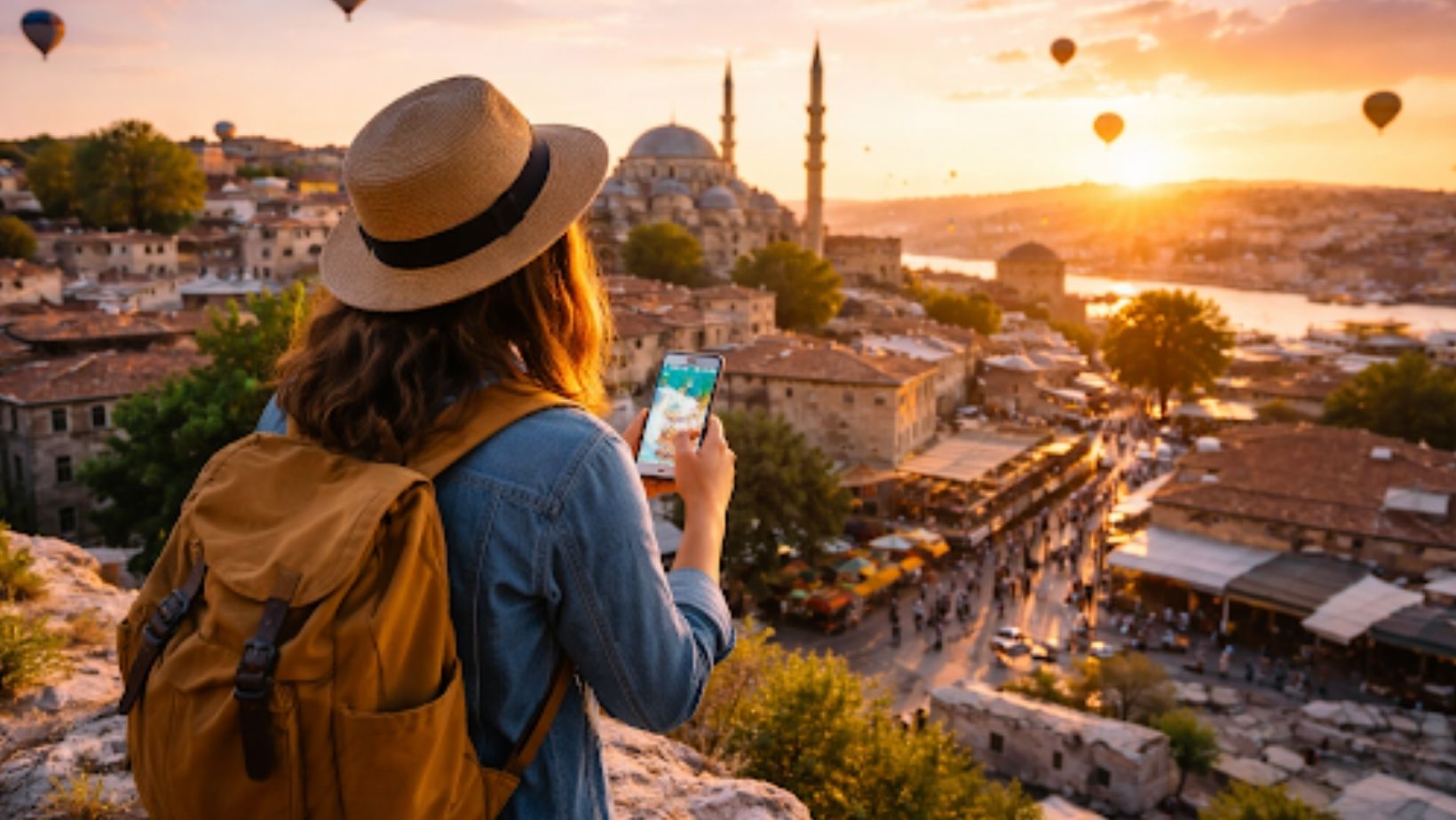
Travel has always been one of the most powerful ways for people to expand their understanding of the world. Leaving familiar environments, encountering new cultures, and observing different ways of living often reshapes how individuals perceive their own societies and identities. For centuries, exploration required long journeys, careful planning, and a willingness to step into the unknown.
Today, however, the experience of travel is evolving. Modern technology has introduced new tools that allow travelers to move through the world in ways that were unimaginable just a generation ago. Smartphones, digital maps, instant translation, and global connectivity have created a new layer of interaction between humans and the environments they explore.
As technology continues to advance, it is transforming not only how people travel, but also how they interpret and engage with the world around them.
Travel As A Catalyst For Perspective
One of the most important aspects of travel is its ability to challenge assumptions. When individuals encounter different cultural traditions, social norms, and lifestyles, they often begin to question the frameworks through which they view their own lives.
Travel can foster empathy and curiosity. It reveals how communities solve problems, organize daily life, and express their values through language, food, architecture, and rituals. These experiences encourage travelers to move beyond stereotypes and develop a deeper appreciation for cultural diversity.
Even short journeys can have profound effects. A conversation with a local resident, a visit to a historical site, or simply navigating unfamiliar streets can create moments of reflection that broaden one’s understanding of humanity.
The Digital Layer Of Modern Travel
While the core experience of travel—exploration, discovery, and learning—remains largely unchanged, the tools people use to navigate the world have evolved dramatically.
Digital technology has added a new layer to travel experiences. Travelers can now access detailed maps, research destinations instantly, and translate unfamiliar languages in real time. These capabilities allow individuals to explore places with greater confidence and independence.
For example, a visitor arriving in a new city can quickly identify transportation routes, locate restaurants recommended by locals, or learn about historical landmarks simply by using a smartphone. Information that once required guidebooks or local assistance is now available instantly.
At the same time, technology allows travelers to share their experiences with global audiences. Photos, videos, and stories posted online create digital narratives that connect travelers with friends, family, and communities across the world.
Connectivity And The Modern Traveler
As travel becomes increasingly global, connectivity has emerged as an important aspect of the experience. Access to the internet allows travelers to communicate, navigate unfamiliar environments, and remain connected to personal or professional responsibilities.
For many people, staying connected is not simply a matter of convenience. It can also provide a sense of security. Being able to contact family members, access emergency information, or locate assistance when needed can make traveling feel more manageable.

In this context, digital tools that support connectivity across borders have become more common. Many travelers rely on solutions such as Holafly’s esim for travelers to maintain internet access while exploring new destinations. These types of technologies make it easier to use navigation tools, translation apps, and travel resources without depending entirely on public Wi-Fi networks.
Connectivity, in this sense, becomes part of the infrastructure that supports modern mobility.
Balancing Technology And Presence
Despite the many advantages of digital tools, some travelers question whether constant connectivity can distance people from the deeper experience of being present in a new environment.
One of the unique aspects of travel is the opportunity to slow down and observe the world with fresh eyes. When attention is constantly directed toward screens, notifications, or social media updates, it can become harder to fully engage with the surroundings.
Many travelers are now seeking ways to balance the benefits of technology with moments of intentional disconnection. Some choose to limit their online activity during trips, focusing instead on sensory experiences—sounds, conversations, landscapes, and cultural encounters.
In this way, technology can serve as a helpful tool without overshadowing the deeper purpose of exploration.
A New Era Of Global Exploration
Human mobility is entering a new era. Advances in transportation, communication, and digital technology have made it possible for more people than ever before to explore distant regions of the world. At the same time, these tools are changing the nature of travel itself.
Travel is no longer solely about reaching a destination. It has become a dynamic interaction between physical movement and digital connection. Maps guide us through unfamiliar streets, translation tools bridge language gaps, and online platforms allow stories to be shared instantly across continents.
Yet the essence of travel remains unchanged. At its core, exploration is about curiosity, learning, and connection—both with places and with people.
As technology continues to evolve, it will likely open new possibilities for how individuals navigate and experience the world. But the most meaningful journeys will always depend on something far older than any device: the human desire to understand what lies beyond the horizon.
About Author