Game reviews shape purchasing decisions, but they’re rarely neutral. One critic hails a game as a masterpiece while another tears it apart for the same reasons, and both might be right, depending on what type of player they are. This is where flipside gaming reviews come in. Instead of pretending objectivity exists, flipside reviews embrace multiple perspectives, showing you how a game plays for different audiences and playstyles. Whether you’re a hardcore competitive grinder, a story-driven narrative junkie, or someone who just wants a chill weekend experience, understanding how to read and leverage flipside reviews transforms how you spend your gaming time and money. This guide breaks down what flipside gaming reviews are, why they matter, and how to use them to make smarter game choices in 2026.
Key Takeaways
- Flipside gaming reviews embrace multiple perspectives to show how a game performs for different player types—competitive grinders, narrative enthusiasts, casual gamers, and completionists—making them more useful than universal scoring systems.
- Understanding your own gaming priorities (story vs. gameplay, difficulty tolerance, playtime expectations, platform) before reading a flipside review lets you quickly identify the sections that matter most to your purchasing decision.
- Flipside gaming reviews acknowledge reviewer bias transparently and treat it as a feature rather than a flaw, allowing readers to weigh perspectives against their own gaming preferences and playstyle.
- Combining at least 2-3 flipside reviews from different sources alongside user feedback provides the most comprehensive picture of a game’s strengths and weaknesses across diverse player audiences.
- Technical evaluation in flipside reviews accounts for platform-specific performance (PC hardware tiers, console differences, mobile optimization) rather than forcing a single assessment across all systems.
- The most reliable flipside approach combines mainstream professional reviews for technical depth, independent reviewers who share your gaming philosophy, and community forums for long-term viability insights.
What Are Flipside Gaming Reviews?
Flipside gaming reviews acknowledge a core truth: no single review can capture every dimension of a game. Instead of forcing a reviewer’s personal experience into a universal score, flipside reviews present multiple angles, how a game functions for speedrunners versus casual players, competitive multiplayer enthusiasts versus story-focused solo gamers, or PC enthusiasts versus console players.
The concept isn’t new, but the approach has matured significantly. Rather than relying on a single 8/10 score that leaves readers guessing what that really means for their gaming style, flipside reviews break down performance, narrative appeal, community depth, and value explicitly for different player archetypes. A game might score high for narrative-driven players but lower for those seeking mechanical depth, and both perspectives get equal weight.
Think of it like reading reviews for a restaurant from someone who’s vegan, someone who loves meat, and someone chasing Michelin stars. Each perspective is valid, and together they give you a complete picture. Flipside gaming reviews operate on the same principle, they’re designed for a gaming landscape where there’s no universal “best game,” only the best game for you.
Why Balanced Perspectives Matter in Game Reviews
The Problem With One-Sided Critiques
Traditional game reviews often suffer from perspective collapse. A reviewer’s personal taste becomes the lens through which an entire game is judged, and if your preferences don’t align, the review becomes almost useless to you. You’ve seen it: a 7/10 review that’s brutal about “hand-holding” when the game’s entire design is to be accessible. Or a glowing 9/10 that praises story beats that feel predictable to veteran players.
One-sided critiques also struggle with niche genres. A roguelike might receive a harsh score from a reviewer who dislikes RNG-heavy gameplay, even though the game delivers exactly what roguelike fans want. A competitive multiplayer shooter might be dinged for lacking a “meaningful” campaign, when players who bought it exclusively for ranked matches don’t care about PvE at all.
Balanced reviews eliminate this guesswork. They acknowledge that a game can be “exactly what you want” for one player and “completely wrong for you” for another, and that’s okay.
How Flipside Reviews Serve Diverse Player Types
Flipside reviews create transparency by explicitly mapping games to player archetypes. A narrative adventure game gets evaluated across:
- How it performs for players seeking character-driven storytelling
- Whether it holds up for players who skip cutscenes and care about moment-to-moment gameplay
- Its accessibility for casual players versus those seeking mechanical mastery
- Value for players who finish once versus completionists hunting every collectible
This structure means casual gamers, hardcore competitors, story enthusiasts, and trophy hunters can all find actionable information in one review. Nobody’s perspective is treated as the “correct” one. Instead, each dimension gets its own honest evaluation, letting readers make informed decisions based on what they prioritize.
Key Elements of Flipside Gaming Reviews
Gameplay Mechanics and Design Philosophy
Gameplay is the skeleton of every game, and flipside reviews dissect it without forcing a single interpretation. A control scheme might feel tight and responsive to experienced players while being overwhelming for newcomers. A difficulty curve might offer rewarding progression for mastery-seekers but frustrate players wanting narrative accessibility.
Strong flipside reviews examine:
- Core loop structure and whether it scales for different skill levels
- How well tutorials, difficulty settings, and assist options serve varied competencies
- Whether mechanical depth rewards experimentation or gates players behind execution barriers
- How design philosophy (minimalist, feature-rich, linear, open-ended) aligns with specific player needs
The review doesn’t declare one philosophy superior, it maps it accurately so readers recognize if it matches their expectations.
Graphics, Performance, and Technical Standards
Technical performance isn’t subjective, but what matters to the player is. A 60 FPS baseline is non-negotiable for competitive shooters but less critical for turn-based tactics. Variable frame rates might be unacceptable on PC but acceptable within console limitations.
Flipside technical reviews address:
- Frame rate consistency and whether it affects gameplay feel, not just aesthetics
- Visual fidelity trade-offs (resolution vs. frame rate, ray tracing impact, draw distance)
- Platform-specific performance (PC scaling, console parity, mobile optimization)
- Loading times and whether they disrupt pacing
- Launch stability, ongoing patches, and developer support
This prevents the frustration of reading “great performance” and discovering it means 1440p at 45 FPS, which might be perfect for your use case or a dealbreaker.
Story, Narrative, and Character Development
Narrative appreciation varies wildly. Some gamers cherish cinematic storytelling and character arcs. Others tolerate story as window dressing for gameplay. Flipside reviews evaluate story independently from game design, acknowledging these different player priorities.
Key aspects include:
- Narrative pacing and whether it complements or disrupts gameplay momentum
- Character writing quality and whether development feels earned or exposition-heavy
- Plot structure (linear versus branching, predictable versus surprising)
- Dialogue authenticity and performance quality
- How story integrates with mechanics (does narrative inform gameplay choices?)
- Whether story stands alone or requires franchise knowledge
A game might score highly for narrative depth with experienced writers but lower for players wanting quick, punchy storytelling. Both assessments remain valid.
Multiplayer, Community, and Long-Term Value
Multiplayer games have dramatically different value depending on playstyle. A battle royale might offer 200 hours of content for competitive grinders but feel hollow for players seeking campaign structure.
Flipside reviews examine:
- Community health and matchmaking quality at different skill brackets
- Content drop frequency and whether balance patches keep the meta fresh or feel reactive
- Cosmetics and monetization philosophy (cosmetic-only, pay-to-convenience, pay-to-win concerns)
- Progression systems and whether they reward skill, time investment, or both
- Ranked versus casual ecosystem and whether both stay viable
- Cross-platform support and how it affects matchmaking
This breakdown lets you assess if the game will hold your interest for your intended playtime without speculation.
How to Read and Interpret Flipside Game Reviews
Understanding Reviewer Bias and Perspective
No reviewer is objective, and flipside reviews don’t pretend otherwise. Instead, they make bias transparent. A reviewer might note: “I prefer tight, challenging combat, so I approached this accessibility-focused title with initial skepticism. Here’s what I found for players seeking accessibility.” This honesty is more useful than pretending neutrality.
When reading flipside reviews, identify:
- The reviewer’s stated gaming preferences and playstyle
- Whether they played on their preferred platform (some reviewers may play competitive games on console when they’re optimized for PC)
- Their familiarity with the game’s genre (veteran roguelike fans versus roguelike newcomers notice different things)
- How long they played (surface-level impressions versus endgame content experience)
- Whether they’re reviewing from a development/design perspective or a pure player perspective
Bias isn’t a flaw in flipside reviews, it’s a feature. You’re getting an honest assessment from someone whose perspective you can weigh against your own.
Identifying What Matters Most for Your Gaming Preferences
Before reading a flipside review, know your own priorities. Ask yourself:
- Are you buying this for story, gameplay, multiplayer, or a mix?
- What’s your tolerance for difficulty and frustration?
- Do you want a 10-hour experience or a 100-hour time sink?
- Are you on PC, console, or mobile?
- Do you care about competitive balance or community size?
- Is accessibility important for your situation?
With these answers, you can quickly scan a flipside review and locate the sections that matter. A story-focused player can ignore competitive balance analysis. A hardcore player can skip accessibility sections (or read them to understand what the developer prioritized).
Flipside reviews should let you find relevant information within 2-3 minutes, not require reading 5,000 words. The best ones use clear sectioning and subheadings to make this scanning possible.
Flipside Reviews Across Different Gaming Platforms
PC Gaming Reviews and Hardware Considerations
PC gaming reviews must account for hardware variability in ways console reviews don’t. The same game runs radically differently on a GTX 1060 versus an RTX 4090. Flipside PC reviews break down performance across hardware tiers:
- Entry-level gaming (GTX 1660 or equivalent): What settings and frame rates are realistic?
- Mid-range systems (RTX 3070 or equivalent): Expected performance at 1440p and 4K options
- High-end systems (RTX 4080+): Frame rate targets and visual fidelity ceilings
- Optimization notes: CPU bottlenecks, VRAM requirements, driver stability
- Platform-specific features: Ray tracing quality, DLSS/FSR implementation, ultrawide support, modding ecosystem
Reviews might also note port quality compared to console versions, does the PC version justify the performance investment, or does it lag behind console optimization?
Console Gaming: PlayStation, Xbox, and Nintendo
Console reviews should distinguish between PlayStation 5, Xbox Series X/S, and Nintendo Switch experiences when relevant. Performance might differ (Series X versus Series S, for example), and exclusive features matter.
Console flipside reviews address:
- Frame rate and resolution targets and whether they’re achieved consistently
- Load time differences (especially post-patch improvements)
- Exclusive content or features per platform
- Controller implementation and haptic feedback usage (PS5 DualSense features, for example)
- Cross-platform progression and whether it matters for the game
- Backward compatibility considerations (does a PS4 version hold up on PS5?)
- Game Pass or PlayStation Plus availability and how it affects value
Nintendo Switch reviews often need to note portable performance and whether docked performance justifies a console purchase over portable play.
Mobile Gaming and Casual-to-Hardcore Crossovers
Mobile gaming reviews face unique complexity: monetization models vary wildly, and the line between casual time-sink and hardcore experience is blurred. Flipside mobile reviews evaluate:
- Monetization philosophy: Pay-once, free-to-play with cosmetics, or pay-to-win gates?
- Session length and whether the game respects limited playtime or demands grinding
- Battery drain and data usage (crucial for mobile)
- Cross-device progression if the game exists on multiple platforms
- Whether the mobile version is a direct port or optimized for touch
- Ads, notifications, and interruption frequency
Many games now exist across PC, console, and mobile (Diablo Immortal, Genshin Impact, Fortnite). Flipside reviews should clarify which version is being reviewed and how it compares to sibling platforms.
Building Your Personal Review Framework
Rating Systems vs. Subjective Impressions
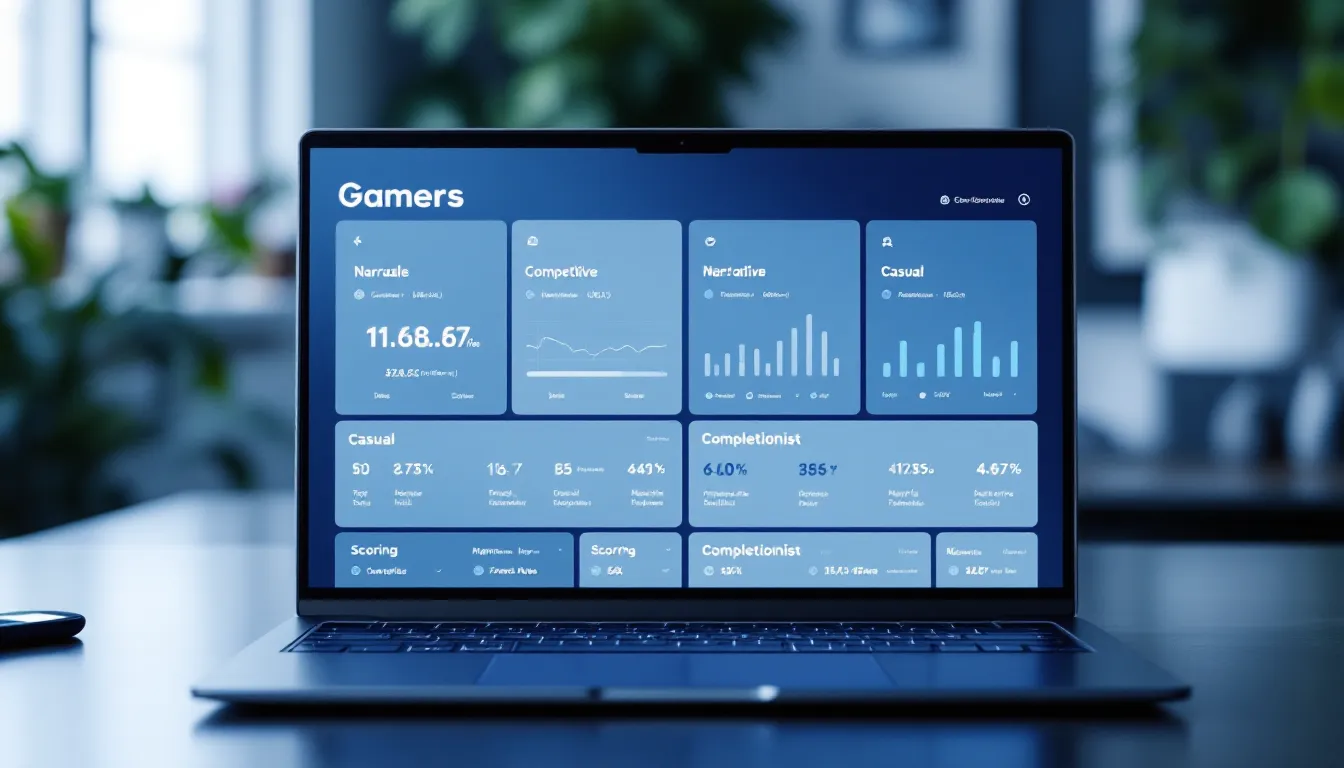
Numberical scores create false certainty. A 7/10 tells you almost nothing, is it “good but flawed,” “fun but limited,” or “divisive with specific player types?” Flipside reviews often abandon pure scores in favor of nuanced breakdowns:
- For Story Enthusiasts: 8/10 (compelling narrative arc, strong character work)
- For Hardcore Players: 6/10 (limited mechanical depth, difficulty plateaus)
- For Completionists: 8/10 (100+ hours of content, well-designed progression)
This framework is more honest than forcing a single score. Some reviewers use “strongly recommended,” “recommended with caveats,” and “skip it” instead of numbers. Others use tier rankings (“S-tier for speedrunners, B-tier for casual players”).
The format matters less than clarity. You should know exactly what the reviewer means and for whom they’re recommending the game.
Combining Multiple Flipside Perspectives for Better Decisions
When a game has multiple flipside reviews from different sources, read at least 2-3 before deciding. Look for:
- Consensus across reviewer perspectives: If three different reviewers say a game’s story is exceptional, that’s reliable data.
- Disagreements on specific elements: If one reviewer says the difficulty curve is perfect and another says it’s punishing, they’re describing the same game accurately, it just depends on your tolerance.
- Gaps in coverage: If no reviewer addresses multiplayer depth and multiplayer matters to you, you may need to seek community feedback beyond professional reviews.
- Evolution over time: Games change with patches. A review from launch might differ significantly from a post-patch perspective. Flipside reviews should note whether feedback is current or outdated.
Combining perspectives creates a more complete picture than trusting any single voice. This is especially true for multiplayer games, where long-term viability depends on live service updates.
Common Flipside Angles and Review Approaches
Casual vs. Competitive Player Reviews
A game designed for relaxation plays completely differently than one chasing esports legitimacy. Flipside reviews often split evaluation:
Casual Player Lens:
- Can you enjoy the game without competitive pressure?
- Does skill cap exist, or can you coast on vibes?
- Are matchmaking systems forgiving for newer players?
- Can you play solo, or is grouping mandatory?
Competitive Player Lens:
- How tight is the frame-perfect execution required?
- Does balance shift with balance patches, or is the meta stale?
- What’s the skill ceiling, and does it reward mastery indefinitely?
- Are ranked systems transparent and skillfully distributed?
A game might score excellently for one audience and poorly for the other, and that’s perfectly fine to document.
Story-Focused vs. Gameplay-Focused Critiques
Some games exist for narrative (The Last of Us, Disco Elysium), while others use story as framework (Doom Eternal, Hades). Flipside reviews separate these concerns:
Story-First Evaluation:
- Does the narrative justify the experience?
- Are character arcs satisfying?
- Does the pacing let story breathe, or does gameplay interrupt momentum?
- What’s the replayability if story is static?
Gameplay-First Evaluation:
- Does the core loop sustain interest?
- Are mechanics tight and responsive?
- Does the game innovate mechanically, or remix existing systems?
- How does story impact (or distract from) gameplay pacing?
A game can be narratively brilliant but mechanically shallow, or brilliant mechanically with a forgettable story. Both are valid critiques for different player types.
Value-for-Money and Pricing Perspectives
Worth is subjective. A $40 game with 10 hours of content might be perfect for a player wanting a weekend experience but overpriced for someone expecting 50+ hours. Flipside reviews address:
- Price-to-hour ratio: How many hours per dollar? (But note: some 5-hour experiences are worth $60: length isn’t everything.)
- Replayability: Is there reason to return after completion?
- Cosmetic vs. gameplay costs: Does monetization feel fair?
- Live service longevity: For multiplayer games, will the studio support it for years?
- Comparison to alternatives: How does pricing compare to similar games in the genre?
Value assessments should always note the reviewer’s assumptions. A competitive player expecting 500 hours values a battle royale differently than someone wanting a short campaign experience.
Where to Find the Best Flipside Gaming Reviews
Trusted Review Outlets and Reviewer Communities
Not all review sources embrace the flipside philosophy, but many have moved toward more nuanced, perspective-aware critiques. Major outlets including IGN, GameSpot, and Metacritic aggregate reviews and increasingly push reviewers to acknowledge different player types.
IGN and GameSpot employ multiple reviewers with different specializations. A single game might have a dedicated reviewer for single-player experiences and a separate one for multiplayer competitive aspects. Their best reviews clearly state who the reviewer is and what they prioritize.
Metacritic aggregates professional reviews and user scores, giving you a snapshot of both critical and community perspectives. High consensus with a massive gap between critic and user scores often signals a game that divides audiences, worth investigating further.
Independent YouTube reviewers often provide the most transparent flipside perspectives. Reviewers who clearly state their gaming preferences (“I’m a speedrunner reviewing Elden Ring”) offer instant context for their critique.
Independent vs. Mainstream Review Sources
Mainstream outlets have infrastructure, resources, and reach. They secure early access and play games thoroughly before launch. But, they sometimes feel obligated to maintain relationships with publishers, which can subtly bias coverage.
Independent reviewers (YouTubers, Twitch streamers, bloggers) operate outside publisher pressure but may lack resources for comprehensive play-throughs. They often have passionate, dedicated audiences who trust their perspective even though smaller reach.
Best practice: Read mainstream reviews for technical depth and launch-day assessments. Read independent reviewers who share your gaming philosophy for alignment-focused critiques. Community forums and Reddit subreddits offer crowd-sourced flipside perspectives from players with hundreds of hours invested.
The strongest approach combines these: mainstream review for technical baseline, independent review aligned with your preferences, and community feedback for long-term viability.
Red Flags and Critical Thinking in Game Reviews
Spotting Potential Review Bias and Sponsored Content
Reviewers aren’t neutral observers, they’re human beings with preferences. Flipside reviews acknowledge bias upfront. But watch for hidden or undisclosed bias:
- Sponsored content: Check if a review mentions “partnerships” or “sponsored by the publisher.” This doesn’t always mean dishonesty, but it introduces incentive misalignment.
- Reviewer history: If a reviewer consistently praises games from Publisher X or harshly critiques Publisher Y, pattern bias might exist.
- Emotional language: Phrases like “broken,” “masterpiece,” or “worst game ever” signal subjective reaction, not objective assessment. Strong opinions are valid, just acknowledge they’re opinions.
- Selective examples: Be wary of reviews showcasing worst-case scenarios (cherry-picked bugs) or best-case moments (scripted story beats) without noting context.
- Absence of tradeoffs: Every game design decision involves tradeoffs. If a review ignores what was sacrificed for what was gained, it’s incomplete.
The best flipside reviews disclose these potential biases rather than hide them. “I’m a story-first player who struggled with this game’s difficulty” is more trustworthy than “This game has poor difficulty balance” stated as fact.
Using User Reviews to Balance Professional Critiques
User reviews offer something professional reviews can’t: cumulative experience. Hundreds of players testing the game across different hardware, regions, and playstyles catch issues missed in controlled review conditions.
How to read user reviews effectively:
- Ignore outliers: A 10/10 or 1/10 review with no explanation isn’t useful. Look for detailed reviews with genuine reasoning.
- Weight recent reviews heavily: A game that shipped broken but was patched six months ago shouldn’t carry the weight of launch-day reviews.
- Sort by playtime: A review from someone with 100+ hours is more credible than someone who played 2 hours and quit.
- Watch for consensus: If 50 reviews mention frame rate drops and one reviewer reports perfect stability, the preponderance of evidence matters.
- Identify review motivation: Some user reviews exist to promote or tank games unrelated to quality. Look for reviews discussing actual gameplay rather than defending/attacking the publisher.
Professional reviews bring expertise and context. User reviews bring scale and long-term perspective. Together, they create a flipside picture that neither can offer alone.
Conclusion
Flipside gaming reviews represent the maturation of game criticism. They move beyond the fiction that reviews can be objective and instead embrace transparency: different players want different things, and both the speedrunner and the story enthusiast can be right in their assessments of the same game.
Using flipside reviews effectively means approaching them strategically. Know what matters to you, your platform, playstyle, tolerance for difficulty, and desired experience, before reading. Identify reviewers whose perspectives align with (or complement) your own. Read multiple angles before purchasing. Watch for bias, both disclosed and hidden. Combine professional reviews with user feedback for comprehensive insight.
In 2026, the gaming landscape is too diverse for a single review score to mean anything. Flipside gaming reviews acknowledge that reality and give you the tools to make decisions confidently. They’re not perfect, no review system is, but they’re far more useful than pretending that every player wants the same thing from every game.
About Author