Have you ever felt like time was just a flat, boring highway? Buckle up, because pentachronism is about to take you on a wildly adventurous detour. It’s not just a fancy word buried in an academic journal: it’s a concept that can twist and turn our understanding of time itself. Today, we’ll jump into what pentachronism is, peel back its historical layers, and explore how it influences various fields. You might even find yourself pondering time differently after this.
So, slip into a comfy seat, and let’s explore this captivating concept together.
Pentachronism
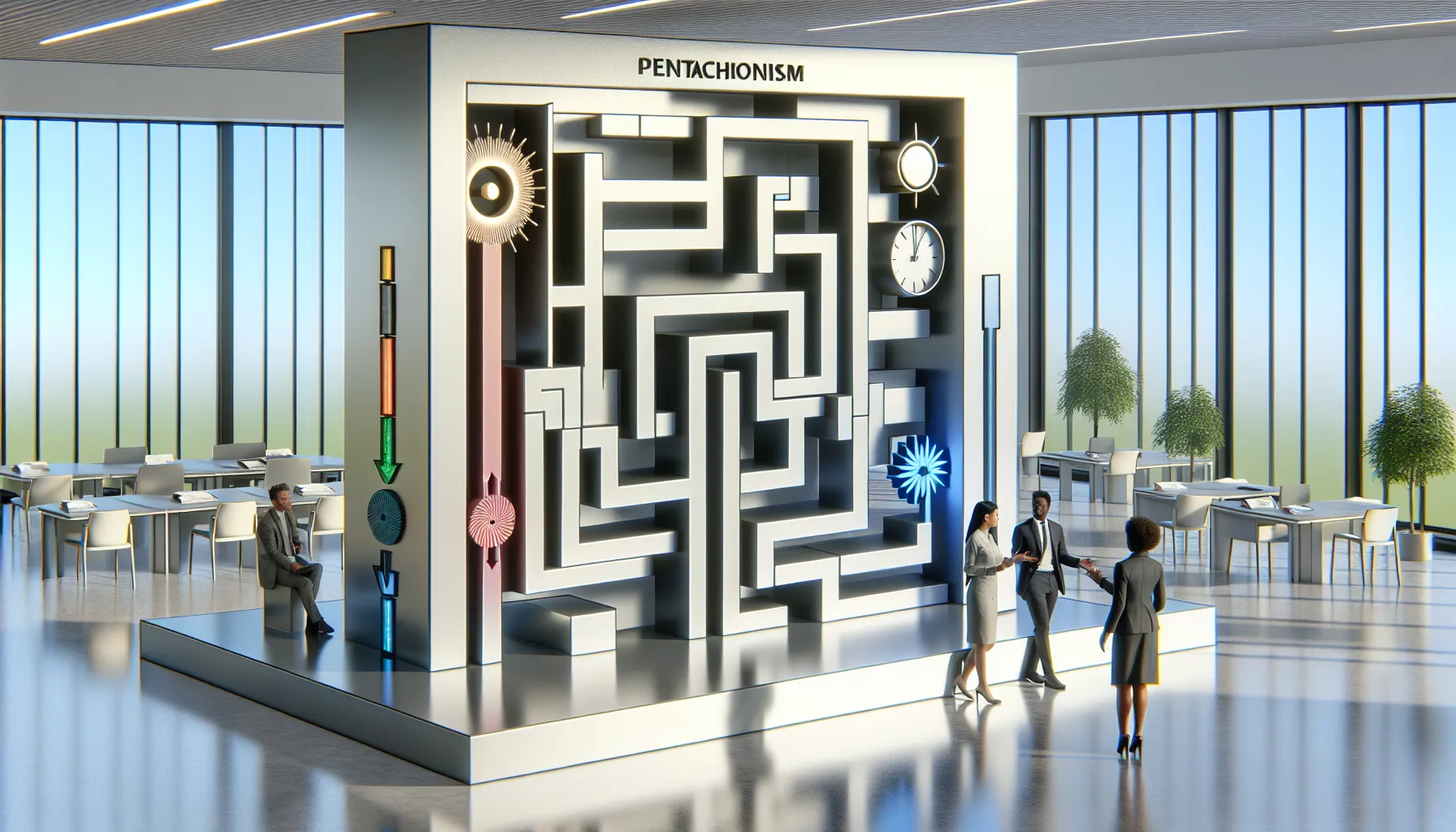
Pentachronism is a fascinating concept that posits the existence of five distinct dimensions of time. Unlike our conventional understanding, which is often limited to past, present, and future, pentachronism broadened the spectrum. To simplify, think of it as viewing time through a multifaceted lens. Imagine navigating a vast labyrinth: each corridor represents a different chronological experience. As we meander through these corridors, we discover that each path influences our reality in unique ways. This not only enhances our notions of historical perspective but also pushes the barriers of how we might mold the future.
Historical Context of Pentachronism
To grasp the weight of pentachronism, it’s crucial to explore its roots. Historically, our relationship with time has evolved dramatically. In ancient cultures, like the Mayans and Egyptians, time was perceived cyclically, intertwining mundanity with spirituality. Fast forward to the Enlightenment and Industrial Revolution, and we see a shift towards linearity, a relentless march forward.
Pentachronism reemerged in the postmodern era, challenging the one-size-fits-all narrative of time. Philosophers and scientists began to advocate for a more nuanced approach. This evolution in thought is essential: it reflects our need to understand time not just as a linear progression but also as a rich tapestry of experiences. We’re beginning to appreciate how this multi-dimensional approach can reshape not just our thoughts on history but also our decisions moving forward.
Key Principles of Pentachronism
At its core, pentachronism revolves around five fundamental principles:
- Multi-dimensionality: Time isn’t a single line: it’s a dynamic field with multiple intersections.
- Interconnectedness: Each dimension of time affects the others, leading to a web of cause and effect.
- Cumulative experience: Our experiences in one time dimension can enrich those in another, deepening personal and collective understanding.
- Perspective shifts: By viewing time through multiple lenses, we can shift our narratives, helping us make more informed decisions.
- Future possibilities: Pentachronism encourages us to visualize and create diverse futures, rather than being locked into a linear fate.
These principles not only lay the groundwork for understanding pentachronism but also inspire innovative thought across various disciplines.
Applications of Pentachronism in Various Fields
When we think of pentachronism, we see its ripples affecting multiple domains. In the arts, it opens new avenues for storytelling. Imagine a novel that weaves five parallel narratives, each set in a different time dimension, allowing readers to experience the layering of events in complex ways. Likewise, in science, especially in fields like physics and cosmology, researchers are exploring non-linear models of time, contributing to groundbreaking theories about the universe.
In education, pentachronism can revolutionize curricula and pedagogical approaches. Instead of solely focusing on chronologically ordered facts, educators can teach themes that intertwine various time perspectives, encouraging students to think critically and creatively. Essentially, we can embrace the endless possibilities of what each dimension of time means for our knowledge and innovations.
Critiques and Challenges of Pentachronism

Of course, no theoretical concept is without its critics. Some argue that pentachronism complicates the simplicity that many prefer when thinking about time. They suggest that humans thrive on linear narratives, easily understood timelines, and clear cause-and-effect relationships.
Certainly, the challenge lies in making the concept accessible. Can we, as educators and thinkers, bridge the gap between complicated theories and everyday understanding? Also, how do we quantify or measure something as abstract as multiple dimensions of time? These are critical conversations that are just beginning, and they open doors for robust debate amongst thinkers.
The Future of Pentachronism
As we forge ahead, the trajectory of pentachronism appears limitless. With ongoing advancements in technology and philosophy, we’re beginning to visualize time in ways our ancestors might not have dreamed possible. Virtual reality and artificial intelligence may serve as tools for exploring different time dimensions, allowing us to experience possibilities rather than just theories. This aligns with our collective yearning for deeper understanding and connection. The future holds immense potential, and as we expand our comprehension of pentachronism, we grow toward a richer, more intricate tapestry of time.
About Author